We design light-responsive nanocatalysts that turn sunlight into chemical reactivity for green hydrogen, CO₂ conversion, and sustainable manufacturing.
We build nanocatalysts that use light to drive the molecular transformations needed for a fossil-free future. By combining plasmonics, catalysis, and precision nanochemistry, we create materials for cleaner fuels, cleaner water, and more sustainable manufacturing.
What We Do
Our research sits at the intersection of catalysis, nanotechnology, and sustainable energy. We develop materials and concepts that reveal how light can be used to accelerate and fundamentally reshape chemical reactions.
We use light-responsive metal nanostructures to amplify catalytic activity and selectivity under visible-light irradiation. Our work combines synthesis, advanced characterization, mechanistic understanding, and theory to create plasmonic platforms that do more with less.
We develop photocatalytic and photoelectrochemical systems for hydrogen production, water splitting, and CO₂ conversion. Our goal is to turn sunlight into chemical value through efficient, robust, and scalable catalytic materials.
We engineer metal, oxide, and hybrid nanostructures with precise control over composition, size, shape, defects, and interfaces. This materials-by-design approach allows us to optimize activity, durability, and selectivity for real-world catalytic applications.
We develop electrocatalysts and electrode architectures for water splitting, oxygen evolution, and hydrogen production. From atomic-scale active-site design to catalyst-coated membranes for PEM and AEM electrolyzers, our work bridges fundamental science and scalable green hydrogen technology.
Latest Updates
Journal Cover
2025
Wang et al. review on high-entropy alloy electrocatalysts selected as Cover Art in Journal of Materials Chemistry A, Royal Society of Chemistry.
Award
2024 – 2025
Recognised with the Springer Nature Editor of Distinction Award for the Journal of Materials Science, two consecutive years.
Appointment
2025 – 2028
Appointed Director of the MATRES Master’s Programme in Materials Research at the University of Helsinki.
Research
2025
Plasmon-enhanced CO₂ methanation over Au@Ru/TiO₂ published in Angewandte Chemie International Edition.
Recent Work
Edited Book
Plasmonic Catalysis
From Fundamentals to Applications
Camargo & Cortés, Eds.
Edited Book
From Fundamentals to Applications
A comprehensive reference covering the foundational principles and cutting-edge applications of plasmonic catalysis — from light-matter interactions at the nanoscale to real-world chemical transformations. The book brings together leading experts to chart the state of the field and open directions for future research.
The People
An international group working across catalysis, nanomaterials, electrochemistry, and light-driven chemistry. We bring together researchers at different career stages from diverse backgrounds.
Principal Investigator
I grew up in Brazil, where sunlight is abundant and the need for sustainable solutions is impossible to ignore. That shaped the scientific question that still drives my work today: how can light be used to power the chemical transformations needed for a cleaner future?
At the University of Helsinki, I lead an international team working at the intersection of catalysis, nanotechnology, and sustainable energy. We design precision-engineered nanoparticles that do more with less — less precious metal, less energy input, less waste.
I am also the scientific lead of ReLIGHT, a pre-spin-out created to translate our discoveries into impact. Science is not only about publishing papers. It is about helping build a fossil-free future, one molecule at a time.
Watch
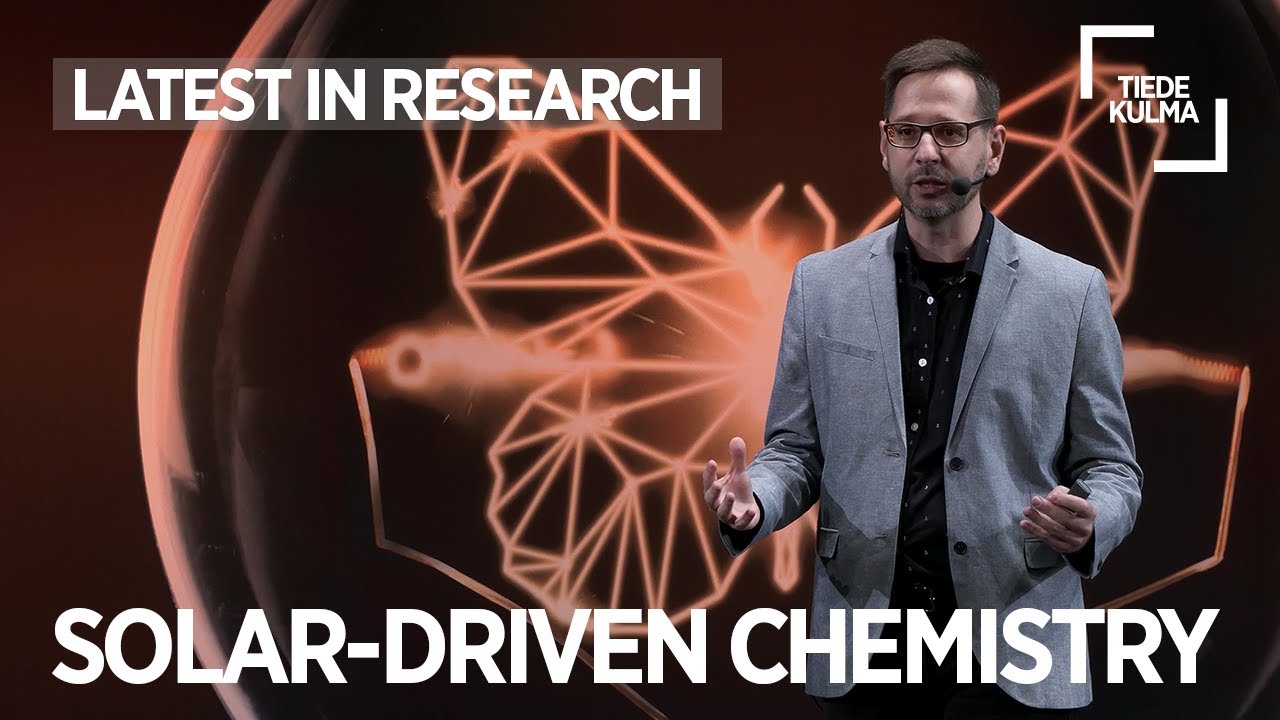
Prof. Camargo presents the lab’s vision for using light-responsive nanoparticles to drive sustainable chemical transformations — recorded at Tiedekulma, University of Helsinki.
From the fundamentals of plasmonic catalysis to real-world applications in green hydrogen and CO₂ conversion.
Spin-out Venture
Translating our catalysis research into low-PGM catalyst coated membranes for PEM and AEM water electrolyzers. Building the technology for green hydrogen at scale.
Lab History
Former group members who have gone on to academic positions, industry roles, and research careers around the world.
Postdoctoral Researchers & Others
Dr. Jiale Wang
2014–2016
Dr. Fabiane Trindade
2014–2015
Dr. Isabel de Freitas
2015–2017
Dr. Ivo Teixeira
2017–2019
Dr. Nedher Sanchez
2018–2019
Dr. Luanna Parreira
2016–2019
Dr. Erandi Peiris
2019–2020
Dr. Jhon Quiroz
2017–2021
Dr. Ivonne López
2018–2019
Dr. Paulo de Oliveira
2018–2019
Dr. Rodolfo Antoniassi
2017–2019
Dr. Shwetha Ariyadka
2020–2022
Dr. Samir Belhout
2020–2021
Dr. Héloïse Barros
2018–2019
Dr. Kaline da Silva
2022–2023
Dr. Leticia Siqueira
2021–2023
Dr. Parisa Talebi
2024–2025
Dr. Sana Frindy
2022–2025
Dr. Tuomas Mennola
2023–2025
PhD Students
Alexandra Macedo
PhD 2012–2016
Anderson da Silva
PhD 2013–2017
Thenner Rodrigues
PhD 2013–2017
Liliam Yamada
PhD 2013–2018
Rafael Geonmonond
PhD 2015–2019
Eduardo Barbosa
PhD 2014–2019
Flávia da Silva
PhD 2020–2026
MSc Students
Caio Oliveira
MSc 2015
Letizia Papa
MSc 2017
Vitor Ribeiro
MSc 2019
Thaylan P. Araujo
MSc 2019
Daniel Sinausía
MSc 2020
Sebastien Hanauer
MSc 2020
Vilma Heczko
2021
Paul Brasseur
2021
Florian Rathmann
MSc 2022
Miko Lehtinen
MSc 2022
Md Mofakkharulhashan
MSc 2024
Ümran Işıl Biçel
MSc 2024
Arthur Reymond
MSc 2024
William Ketola
MSc 2025
Edesa Behaj
MSc 2025
Visiting Students & Research Assistants
Shiqi Wang (Rafa)
Visiting PhD Student
Mari Nicolas
Visiting PhD Student
Pakala Pranava
Research Assistant
Elisabeth Lemetti
Research Assistant
Wilker de Melo
Visiting MSc Student
Florent Valembois
Visiting MSc Student
Pedro Cantarero
PhD Student
Open Positions
We are always interested in hearing from talented MSc students, doctoral researchers, and postdoctoral fellows who want to work on catalysis, nanomaterials, and sunlight-driven chemistry.
In our group, you will work on scientifically ambitious problems with real-world relevance, in an international environment that values curiosity, independence, and collaboration.
Diversity strengthens science. We welcome motivated people from different backgrounds who want to contribute to research that matters.
Acknowledgements
Find Us
Department of Chemistry
University of Helsinki
A.I. Virtasen aukio 1
00014 Helsinki, Finland
Chemicum, A.I. Virtasen aukio 1, 00560 Helsinki